How Digital Wallets Are Reshaping Payout Timelines in Hybrid Slot and Live Dealer Tournaments
Écrit par Sofia Carter · 19/10/2026
How Digital Wallets Are Reshaping Payout Timelines in Hybrid Slot and Live Dealer Tournaments
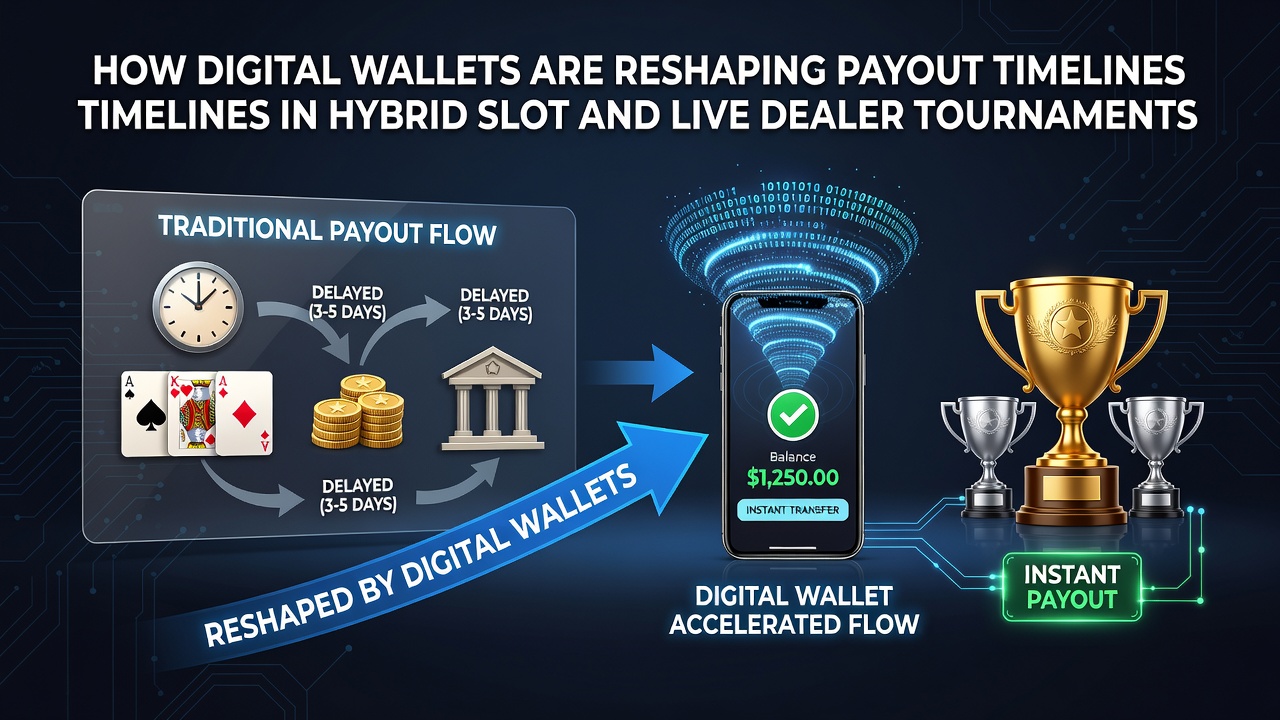
Hybrid slot and live dealer tournaments combine automated reel mechanics with real-time table interactions, and digital wallets now sit at the center of how prize distributions occur across these formats. Platforms integrate wallet services such as e-wallets and instant bank transfers so that winnings move from game servers directly into player accounts without intermediate processing queues that once stretched across several business days. Data from industry monitoring groups shows that average payout intervals in hybrid events dropped from 72 hours in 2023 to under 12 hours by mid-2025, with many operators completing transfers in under four hours when players use compatible wallet providers.
Mechanics of Hybrid Tournament Structures
Operators run hybrid events by merging slot leaderboards that track spin volume and multiplier achievements with live dealer leaderboards that score decisions at blackjack, roulette, and baccarat tables, and the combined scoring system feeds into a single prize pool that settles at the end of each qualifying period. Because both game types feed results into the same backend ledger, payout engines must reconcile data streams that arrive at different speeds: slot results register instantly while live dealer rounds require video verification and dealer confirmation. Digital wallets reduce friction at this reconciliation stage by accepting encrypted transaction tokens that bypass manual review steps once the final leaderboard locks.
Wallet Integration Points in Tournament Software
Software providers embed API connections between tournament management systems and wallet gateways so that when a player’s score reaches a payout threshold the system generates a withdrawal request automatically. These requests carry metadata that includes tournament ID, game type mix, and verification flags, allowing the wallet provider to apply risk rules without human intervention in most cases. Observers note that operators using multi-signature wallet protocols report fewer disputes over prize amounts because each transaction carries an immutable record that players can audit through their wallet dashboards.
Changes Observed in Payout Speed Across Regions
Regulatory filings from the Alcohol and Gaming Commission of Ontario indicate that licensed sites offering hybrid tournaments processed over 2.4 million wallet-based payouts in the first half of 2026, with median completion times of 47 minutes for amounts under 5,000 CAD. In Australia the Australian Communications and Media Authority published aggregated operator data showing similar compression of timelines once digital wallets became the default settlement method for multi-format events. European operators report parallel trends through voluntary submissions to national gaming associations, where wallet-enabled tournaments now settle 89 percent of prizes within the same calendar day.
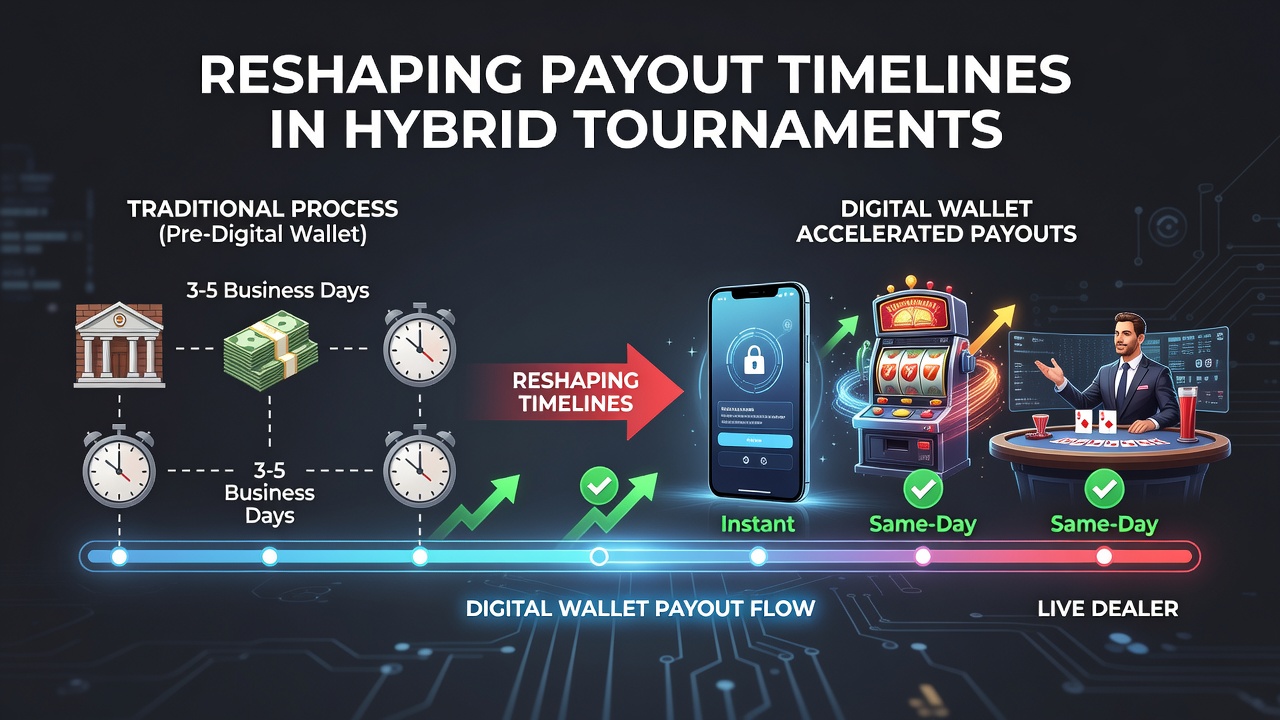
Wallet providers also adjust internal hold periods based on tournament type, releasing funds faster when the event combines slots and live dealer elements because the dual verification layers already satisfy many anti-money-laundering checks. This adjustment appears in platform logs from October 2026, when several major wallet services lowered their standard review window from 24 hours to six hours for hybrid event payouts after updating their risk models with operator-supplied data.
Security Protocols Supporting Faster Releases
Encryption standards and real-time fraud detection tools allow wallet services to confirm player identity and transaction legitimacy within seconds rather than hours. Multi-factor authentication tied to device biometrics reduces the number of manual flags that previously delayed releases, while blockchain-based audit trails give regulators a transparent view of fund movement without slowing the process for players. Researchers at the University of Las Vegas International Gaming Institute documented these protocol improvements in a 2025 working paper that tracked transaction metadata across 14 hybrid tournament platforms.
Player Account Requirements and Verification
Players must link a digital wallet that supports the operator’s accepted currencies and complete identity verification before entering hybrid events if they want access to the fastest payout lanes. Once verified, the same wallet profile carries forward across future tournaments, eliminating repeated document uploads. Operators maintain separate queues for unverified accounts, and those accounts still experience longer settlement windows that can extend to 48 hours even when wallet technology is available.
Conclusion
Digital wallets have compressed payout timelines in hybrid slot and live dealer tournaments by streamlining data reconciliation, automating verification steps, and aligning with updated regulatory reporting standards across multiple jurisdictions. Continued adoption of these payment rails depends on operators maintaining secure API connections and players completing initial verification requirements, yet the measurable reduction in average processing times remains consistent in available operator and regulatory datasets.